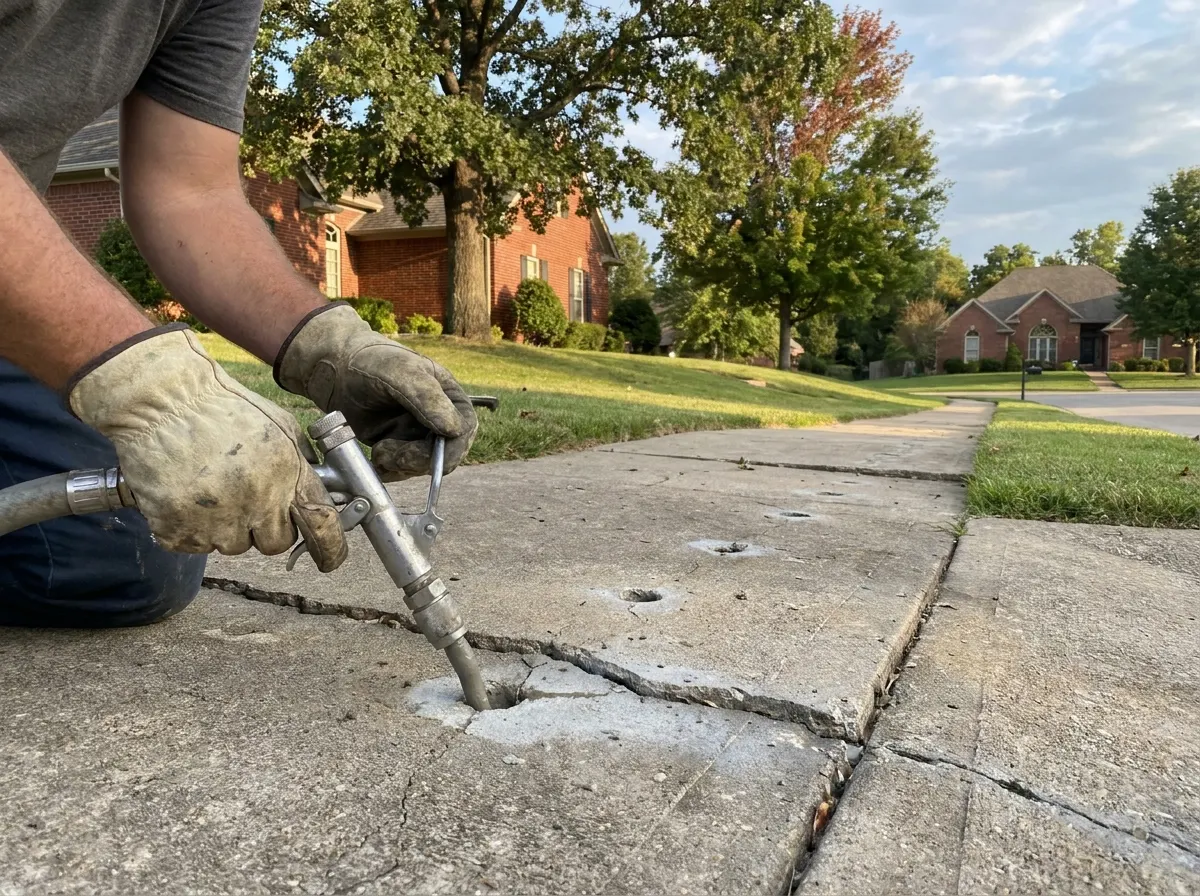
Why slabs settle in Louisville
A concrete slab is only as stable as what is underneath it. In Louisville, a few things work against that stability.
Some of Jefferson County's most common soils contain clay layers, and USDA data shows shrink-swell is the most common limitation for homes with basements here. Clay swells when it gets wet and shrinks when it dries, and the American Concrete Institute lists soil shrinking as it dries as a main cause of slabs settling.
Louisville also averages about 74 nights a year with lows at or below freezing. Repeated freeze-thaw cycles push soil around and can cause the base under a slab to shift. Heavy rain can also wash out the base under a slab, which the American Concrete Institute lists as another common cause.
Kentucky's code also rates the chance of concrete weathering as "severe" in every county.
Mudjacking and foam leveling: what each one is
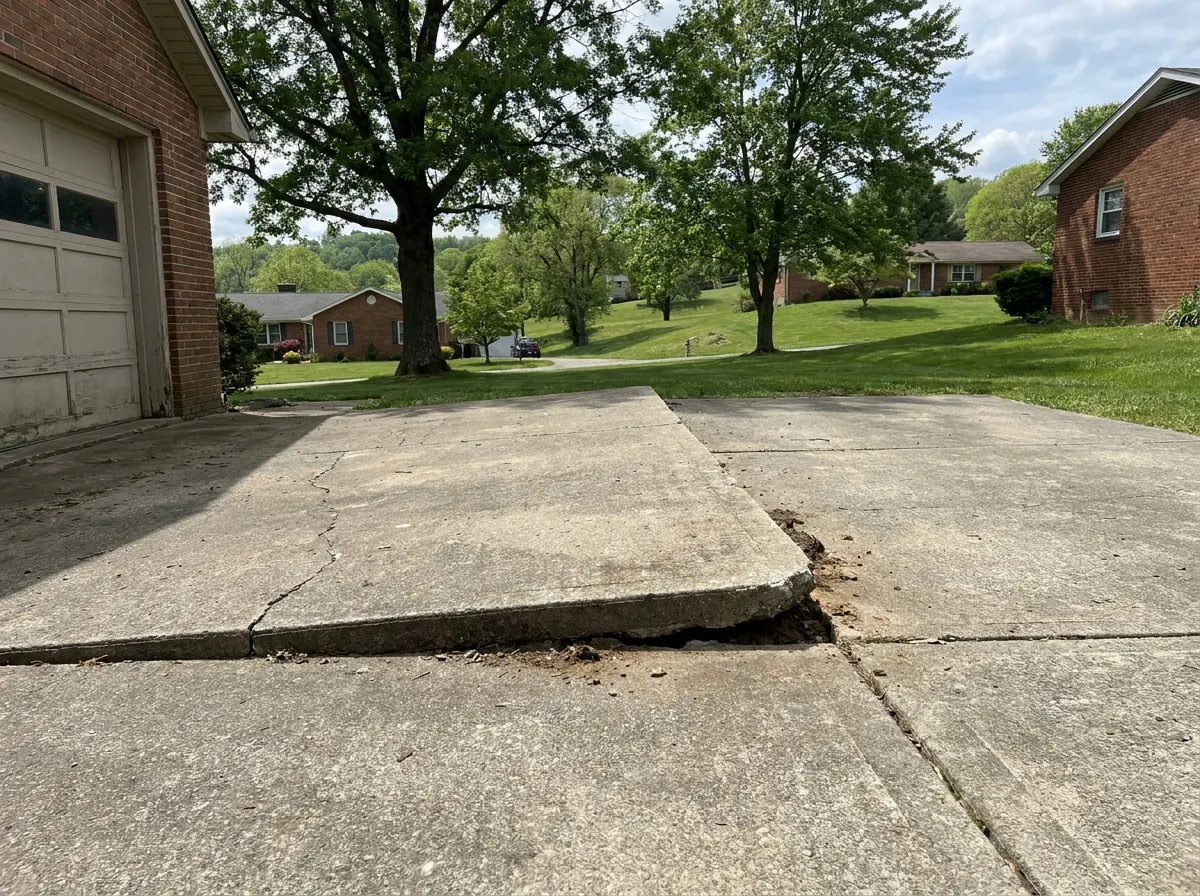
When a contractor talks about slab jacking, they are describing the general process of drilling small holes in the slab and pumping material underneath to fill voids and push the slab back up. There are two common materials:
Mudjacking uses a cement-based grout mixture. It is heavier and tends to fill the void more completely. Because it is heavy, it may not be the right choice where the soil underneath is already weak.
Foam leveling uses polyurethane foam that expands after injection. It works faster and adds very little weight. The trade-off is that foam does not always fill the void completely.
Both are options a contractor may suggest depending on the slab, the soil, and the size of the problem. This referral service does not recommend one over the other. A contractor can assess your specific situation and explain which approach fits.
What leveling does and does not do
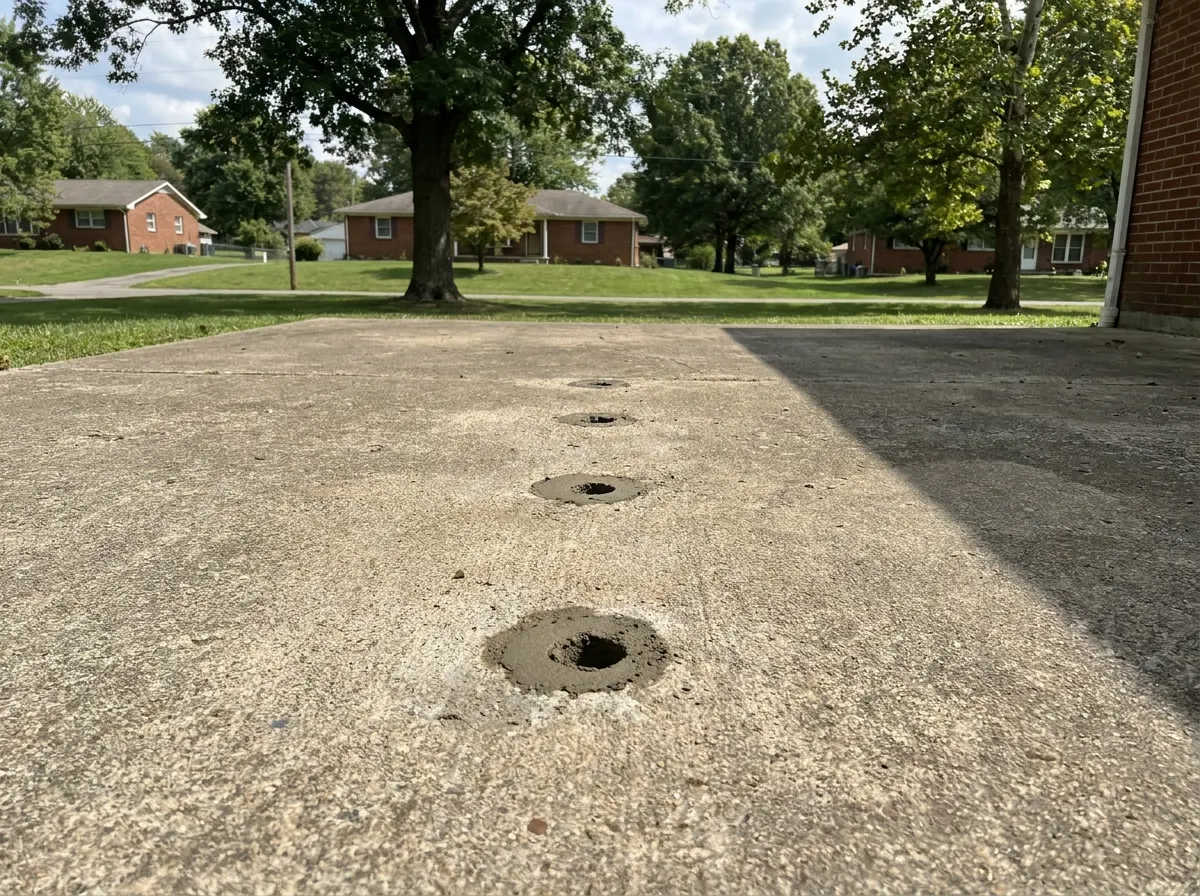
Leveling raises the slab and fills the void underneath it. It does not fix the soil condition that caused the settling in the first place.
If water is still draining toward the slab, or the clay underneath keeps drying and shrinking, the slab can settle again. Kentucky code says the ground should drop at least 6 inches in the first 10 feet away from the foundation. Fixing grading and making sure downspouts carry water away from the area is often the right companion to leveling work.
Leveling also will not erase existing cracks. The cracks stay visible after the drilled holes are patched. A contractor can tell you whether cracks are cosmetic or worth monitoring.
A sunken slab is a trip hazard and it only gets worse with time.
That uneven edge on the driveway or the patio that tilts toward the house looks minor until someone catches a toe on it. And water running toward your foundation is never a small thing.
Concrete leveling raises the slab back to where it belongs without tearing out and replacing the whole thing. The trip edge disappears and water flows away from your home again.
Talk to a Local ProYou'll reach one of Louisville's top-rated concrete leveling contractors, free quote, no obligation. Call (502) 660-8764
Permits
Louisville Metro's permit-exempt list includes driveways and sidewalks, and retaining walls under 4 feet tall. Ask your contractor to confirm what applies to your specific project.
Before any drilling, call 811 at least two full business days ahead. Utility lines run under yards and driveways, and the call is free.
What affects the cost
Contractors consider several factors when pricing a leveling job:
- The size of the slab and how many holes need to be drilled
- How much material is needed to fill the void
- Which method (mudjacking or foam) fits the situation
- Accessibility and how close the equipment can get
- Whether grading or drainage work needs to happen alongside it
Choosing a contractor
Louisville Metro requires contractors to be licensed locally with proof of liability insurance. Get more than one written estimate and compare what each one includes. Ask specifically whether the quote covers patching the drill holes and what happens if the slab settles again. Get the full scope in a written contract, and do not pay the full amount up front.
Frequently asked questions
My patio has settled on one side. Is leveling always the right fix?
It depends on why it settled. If the void is from soil shrinkage or washout, leveling may work well. If the soil underneath is still moving or water is still draining toward the slab, leveling without addressing the drainage may be temporary. A contractor can probe the area and give you an honest read.
Will the drill holes show after the job?
Yes. The holes are patched after the material is pumped in, but the patches stay visible. If the slab is in a very visible spot, ask the contractor what the finished patches look like.
Does leveling work on garage floors?
It can, yes. Garage floors settle for the same reasons as outdoor slabs. A contractor will check whether the floor has enough structural integrity to handle the process and whether the void underneath is accessible.
Level concrete is safer concrete.
Call now or fill out the form to get connected with one of Louisville's top-rated concrete leveling contractors.