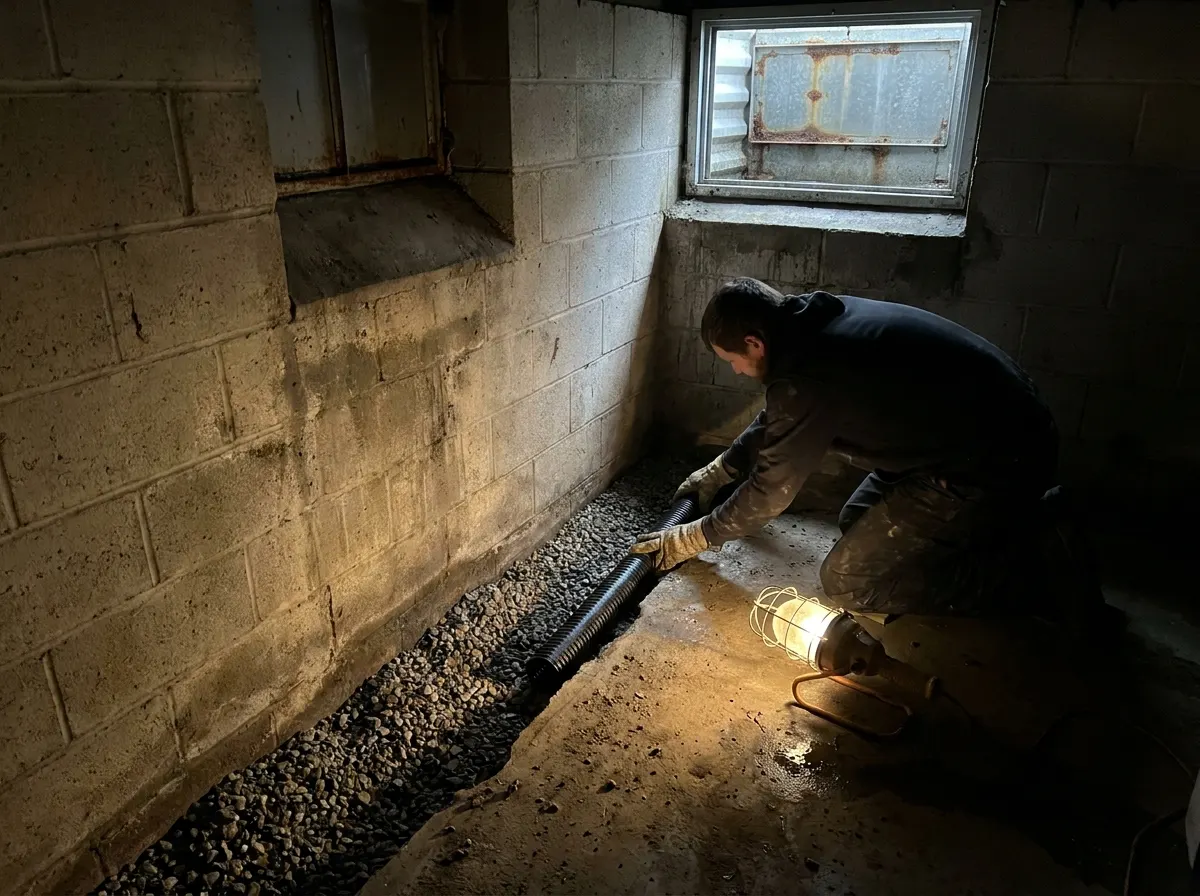
Where the water is coming from
A wet basement usually has more than one source, and knowing the general categories helps when you talk to a contractor.
Surface water is the most common starting point. Louisville averages about 48 inches of rain a year, and spring is the heaviest stretch: March through May each average more than 4.5 inches, with May coming in around 5.2 inches. When that water isn't directed away from the house, it finds its way in.
Grading matters. Kentucky code says the ground should fall at least 6 inches in the first 10 feet away from the foundation. When soil has settled flat or slopes toward the house, water pools against the wall.
Downspouts that dump water right at the foundation are another common factor. If the discharge ends within a few feet of the house, that water is going to look for somewhere to go.
Clay soil adds pressure. USDA data for Jefferson County shows that shrink-swell clay is the most common basement limitation here. When clay gets wet it swells, and when it dries it shrinks. That movement can stress walls and open gaps where water gets in.
Sewer backups are a separate problem. Louisville has older combined sewers in some areas, where storm water and wastewater share one pipe. MSD says heavy rain can overload both combined and separate systems, causing basement backups. Heavy rain has flooded basements here before: on August 4, 2009, 4.53 inches of rain fell at the airport, 3 inches of it in one hour, and basements flooded across Louisville, Jeffersonville, New Albany, and Clarksville. In March 1997, a record 7.22 inches fell in one day and MSD received more than 7,000 calls, mostly about sewer backups and surface flooding.
What the code says about wet and damp basements
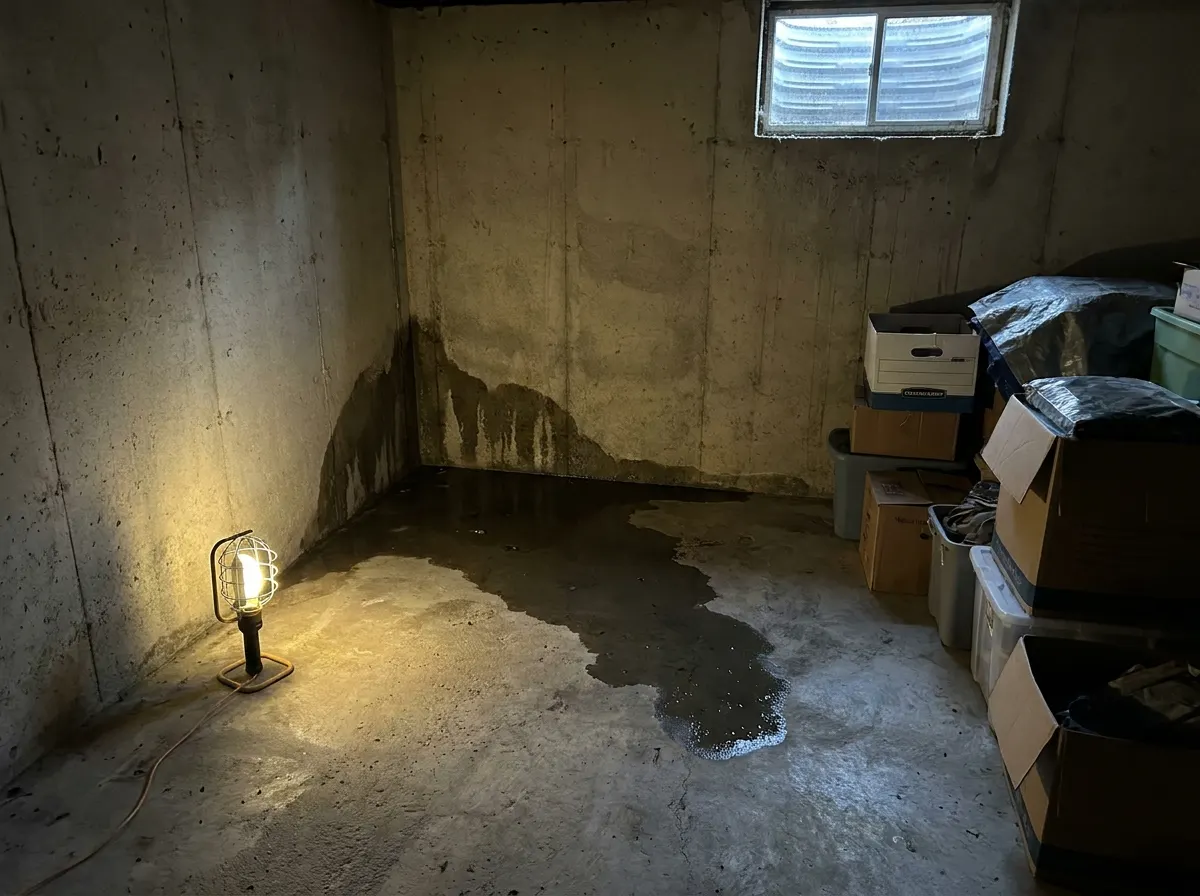
The Kentucky Residential Code, built on the 2015 International Residential Code with Kentucky changes, sets a baseline: basement walls that hold back earth require dampproofing at minimum. Full waterproofing is required where a high water table or severe soil-water conditions are known. The code also requires foundation drains around basements that hold back earth, and those drains must discharge to an approved system by gravity or a pump.
Whether your home was built to the current standard, and what condition those systems are in now, is something a contractor can assess.
What a contractor may suggest
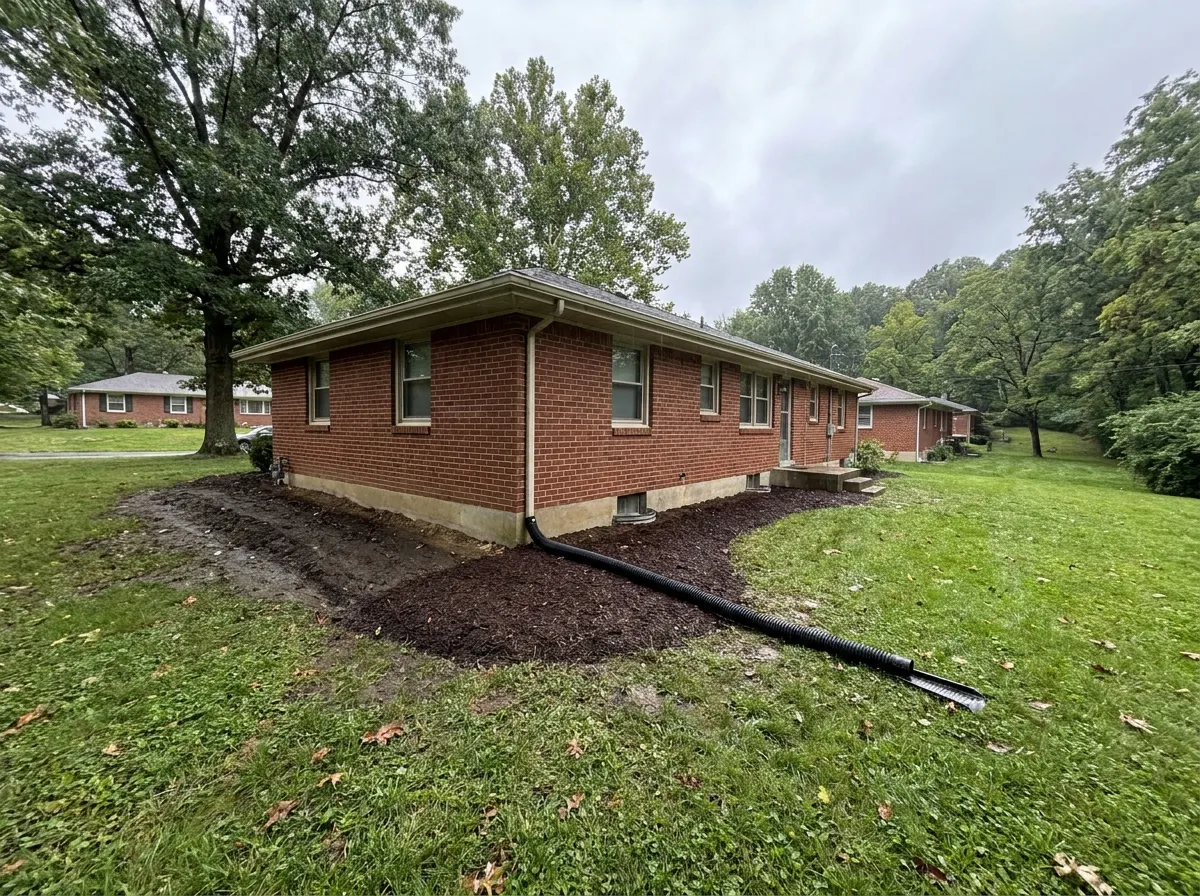
Options vary depending on where the water is entering and what's already in place. A contractor may look at some combination of the following:
- Improving grading and extending downspouts to move surface water away from the house
- Interior drain tile (a channel along the footing that collects water and routes it to a sump)
- A sump pump or a backup sump pump
- Exterior waterproofing membrane on the foundation wall (requires excavation)
- Crack injection or wall sealing for specific entry points
These are general categories. A contractor will look at your specific situation and explain what they think makes sense and why.
Water in your basement after every heavy rain is exhausting.
The smell hits you at the top of the stairs before you even see the floor. You've moved the boxes, rolled up the rug, and you're still watching it happen again.
The right waterproofing solution keeps that water out before it ever reaches your floor. A dry basement means you stop dreading the forecast.
Talk to a Local ProYou'll reach one of Louisville's top-rated basement waterproofing contractors, free quote, no obligation. Call (502) 660-8764
MSD rules that affect basement waterproofing work
Three MSD rules come up often on waterproofing jobs.
Sump pump discharge: connecting a sump pump to the sewer is illegal in Louisville. MSD says those connections overload the pipes and cause backups. Sump water has to go outside, not into the sewer. Your contractor should route it so it drains away from the house without causing problems next door. MSD will pay to disconnect and redirect a sump pump from the sewer, up to a limit, for owners who do it voluntarily, and it pays the contractor directly after the work passes inspection. Owners who don't disconnect pay a monthly surcharge on the sewer bill.
Downspouts: MSD runs a Downspout Disconnection Program. MSD inspects first, and approved options include a splash block, piping water away from the house, rain barrels, or a French drain. Call MSD before starting work.
Backflow valves: if sewer water has backed up into your basement during heavy rain, call MSD at 502-540-6000 and ask what backup-prevention help is available.
Also call 811 at least two full business days before any digging. In Kentucky that applies to homeowners too, and it's free.
What affects the cost of basement waterproofing
No two jobs are priced the same. Factors a contractor will weigh include:
- Whether the fix is interior, exterior, or both (exterior work requires excavating around the foundation)
- The size of the basement and the length of wall or footing involved
- Whether a sump pump needs to be added, replaced, or upgraded
- How many entry points exist and how accessible they are
- Whether drain tile or other drainage work is already in place
- The condition of the existing grading and downspout system
Getting more than one written estimate helps you understand what's actually being proposed and why the prices differ.
How to choose a basement waterproofing company
Louisville Metro requires contractors to be licensed locally, with proof of liability insurance. The Kentucky Attorney General's advice: get more than one estimate, ask for proof of insurance, get a written contract with the scope, timeline, and cost, resist high-pressure "sign today" pricing, don't pay up front, and don't sign insurance checks over to a contractor.
Ask whether a permit applies to the work being proposed. For drainage, sump, and related work, ask your contractor whether a permit is required. Louisville Metro Construction Review: (502) 574-3321.
Frequently asked questions
My basement only leaks after a heavy rain. Does that mean it's a surface water problem?
It often points that way, but not always. A contractor will look at where the water is entering, how the ground slopes around the house, where your downspouts discharge, and what's happening with the soil. Sometimes it's a straightforward grading fix; sometimes there's more going on.
What's the difference between dampproofing and waterproofing?
Dampproofing is a coating applied to the outside of a foundation wall to resist moisture in normal soil conditions. Waterproofing is a more robust system designed for situations where water pressure is higher or soil conditions are more severe. The code sets the minimum standard; a contractor can explain what your situation may warrant.
Can a sewer backup cause basement flooding even if my foundation is fine?
Yes. MSD says heavy rain can overload both combined and separate sewers and cause basement backups. That's a separate issue from a foundation leak. If you suspect sewer backup, call MSD at 502-540-6000 to discuss what options may be available.
A dry basement is worth a phone call.
Call now or fill out the form to get connected with one of Louisville's top-rated basement waterproofing contractors.