What kinds of cracks show up in Louisville basements
Not all cracks are the same, and a contractor will want to know more than just that one exists.
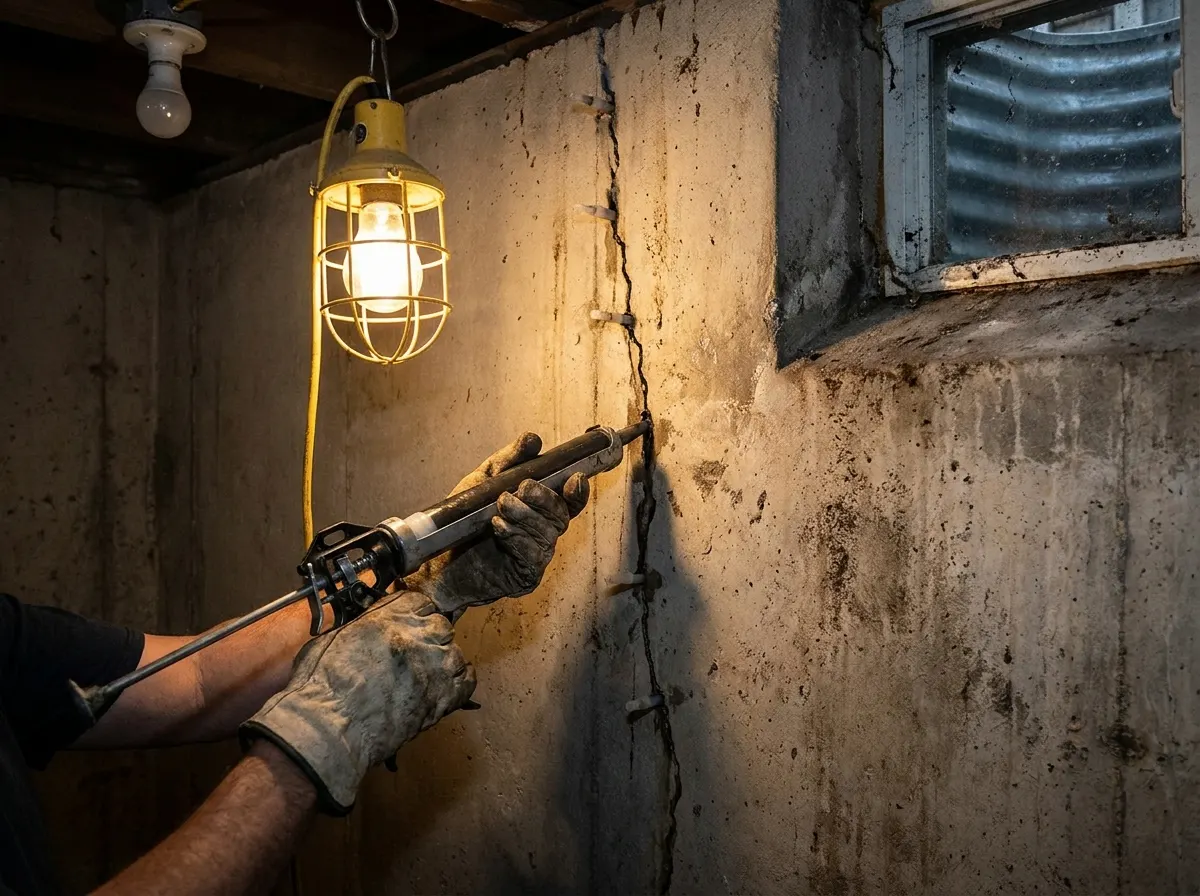
Hairline cracks in poured concrete walls are common and often the result of normal curing and minor settling. They're worth monitoring, but a thin, stable crack that isn't leaking is usually lower priority.
Wider cracks, cracks that are actively leaking water, cracks that have grown since you first noticed them, or cracks with one side higher than the other are worth getting a contractor out to assess. Horizontal cracks in block or poured walls can indicate lateral soil pressure and are generally considered more serious than vertical ones. Stair-step cracks in block or brick walls follow the mortar joints and may point to differential settling.
Foundation crack repair and cracked foundation concerns sometimes overlap with other signs: doors or windows that are out of square, drywall cracks upstairs, or floors that feel uneven. Those patterns can have more than one cause, which is why a professional look matters.
Why foundations crack here
Louisville's conditions put foundations through a lot.
The freeze-thaw cycle is one factor. Louisville averages about 74 nights a year with lows at or below freezing, so the ground freezes and thaws repeatedly through the winter. That movement puts stress on concrete and block walls over and over each season.
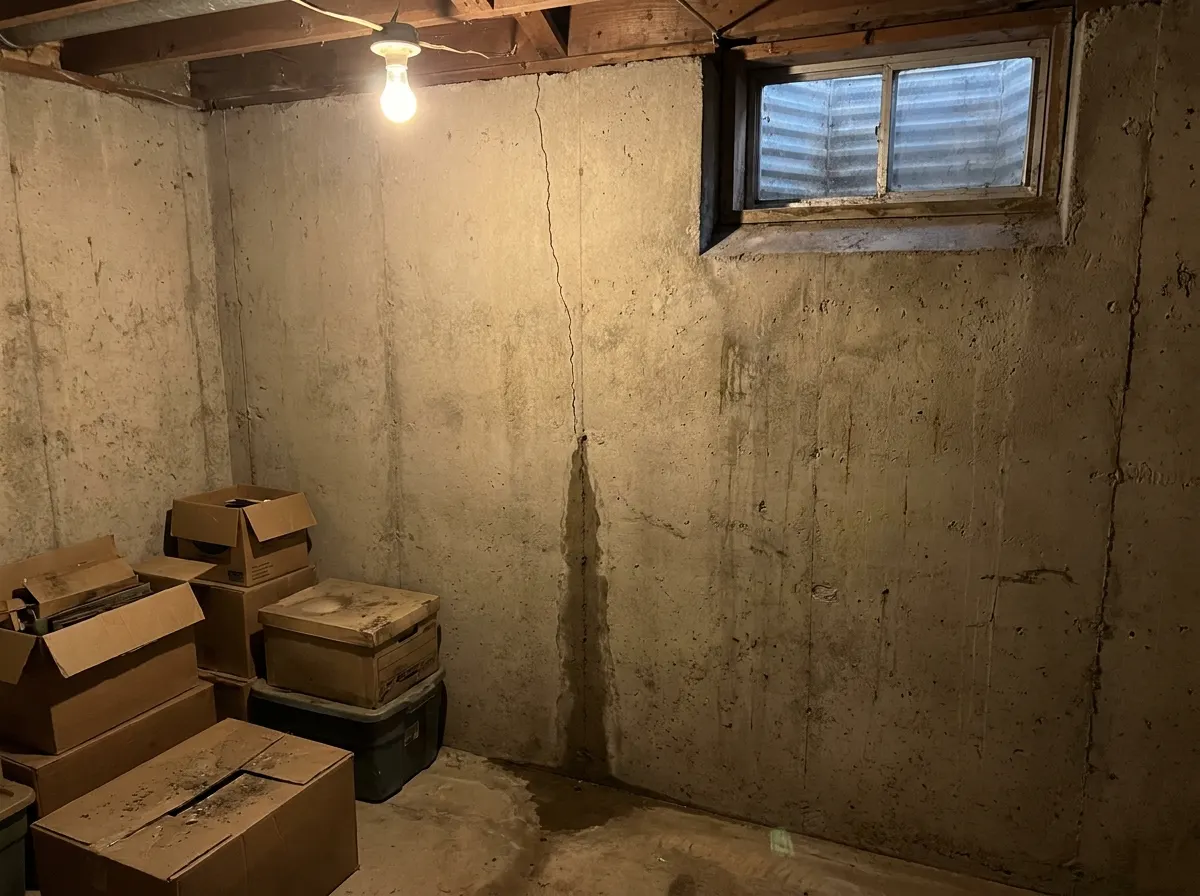
Clay soil is probably the bigger ongoing force. USDA survey data for Jefferson County shows that shrink-swell clay is the most common limitation for homes with basements here. Some of the county's most common soils contain clay layers that expand when wet and contract when dry. That repeated movement pushes against walls when wet and pulls away when dry, and over years it can open or widen cracks.
Water pressure adds to it. When grading slopes toward the house or downspouts discharge close to the foundation, water saturates the soil against the wall. Kentucky code says the ground should fall at least 6 inches in the first 10 feet away from the foundation, and settled soil around a house can lose that slope over time.
Karst terrain is present in the eastern and central parts of Jefferson County. The Kentucky Geological Survey notes that sinkholes there can damage buildings, though they rarely swallow a house. UK Cooperative Extension points out that cracks in foundation walls and out-of-square doors and windows can also be caused by clay soils shrinking and swelling. That overlap is one reason the cause needs a professional look rather than a guess.
What a contractor may suggest
Options depend on the type of crack, what's causing it, and whether there's any structural concern.
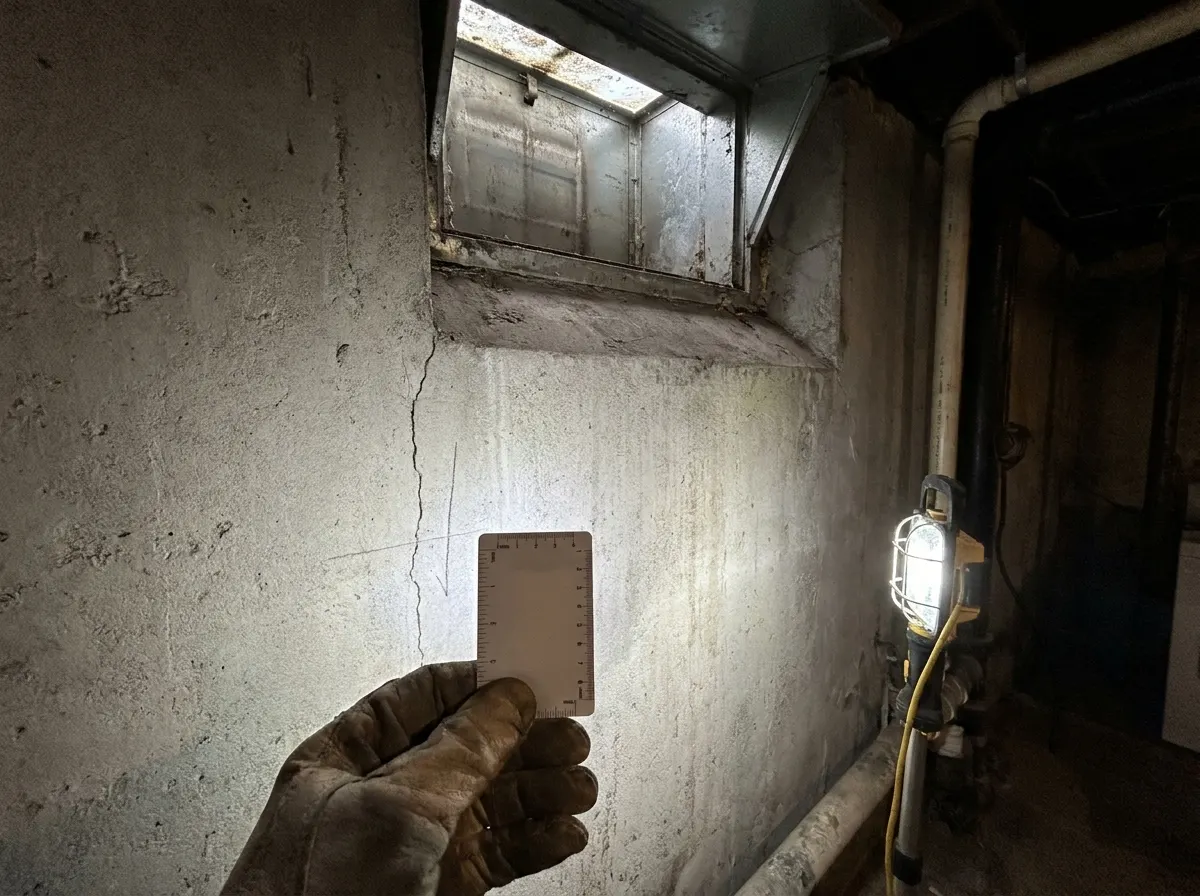
For non-structural cracks that are leaking, a contractor may suggest injection with epoxy or polyurethane foam to seal the crack from the inside. For cracks related to wall movement or soil pressure, options may include wall anchors, carbon fiber straps, or other stabilization approaches. Improving grading and extending downspouts to move water away from the house is often part of the conversation regardless of what else is proposed.
These are general categories of what contractors in this area work with. A contractor will look at your specific situation and explain what they think applies.
That crack looks a little longer than it did last year.
You've been watching it, maybe even measured it with a pencil mark on the wall. Now there's a damp streak along it and you're not sure what it means.
A local contractor identifies what's causing the crack and seals it properly. You stop watching it and start trusting your walls again.
Talk to a Local ProYou'll reach one of Louisville's top-rated basement crack repair contractors, free quote, no obligation. Call (502) 660-8764
When a permit may be needed
Louisville Metro requires a building permit to alter or repair a building, and only licensed contractors or the property owner can pull one. Louisville Metro Construction Review: (502) 574-3321.
Structural repairs and new openings in walls need a permit. For sealing work, ask your contractor whether a permit applies. If you're in Jeffersontown, permits go through the City of Jeffersontown, not Louisville Metro. Ask your contractor what applies to the specific work being proposed.
Permitted jobs in Louisville Metro post a royal-blue placard on the outside of the property, visible from the street.
Call 811 at least two full business days before any digging. In Kentucky that applies to homeowners too, and it's free.
What affects the cost
Crack repair costs vary based on several factors a contractor will consider:
- The type of crack and whether it's structural or non-structural
- How many cracks there are and how long or wide they run
- Whether water is actively entering and what drainage work may be needed alongside the repair
- Whether the wall has moved and needs stabilization beyond sealing
- Access to the area from inside or outside
Getting more than one written estimate helps you compare what's actually being proposed, not just the final number.
How to choose a contractor for crack repair
Louisville Metro requires contractors to be licensed locally, with proof of liability insurance, and it is illegal to work without one. The Kentucky Attorney General's advice: get more than one estimate, ask for proof of insurance, get a written contract with the scope, timeline, and cost, resist high-pressure "sign today" pricing, and don't pay up front.
Be cautious of any contractor who diagnoses a serious structural problem on a quick walk-through without explaining their reasoning, or who pressures you to decide before getting another opinion.
Frequently asked questions
How do I know if a crack is structural or just cosmetic?
A contractor needs to make that call in person. General signs that a crack is worth taking more seriously include horizontal orientation, visible wall displacement, active water entry, or noticeable growth over time. A hairline crack that hasn't changed in years is a different situation than one that's widened since last spring.
Can clay soil really cause foundation cracks without any sinkhole or major settling?
Yes. USDA data for Jefferson County shows that shrink-swell clay is the most common basement limitation in the county. The repeated expansion and contraction of clay against a foundation wall over many years can open cracks even without any dramatic settling event. UK Cooperative Extension notes that the signs of clay movement and karst activity can look similar, which is why a contractor's assessment matters.
Do I need a permit to have a crack repaired?
It depends on the scope of the work. Louisville Metro requires a permit to alter or repair a building, so structural repairs need one. Ask your contractor what applies, and confirm with Louisville Metro Construction Review at (502) 574-3321 if you're unsure.
Stop watching that crack and get an answer.
Call now or fill out the form to get connected with one of Louisville's top-rated basement crack repair contractors.